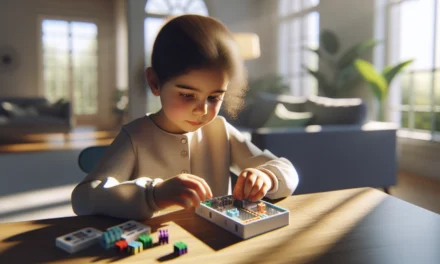
Many parents face the challenge of sparking interest in science and technology, so this guide offers a mix of simple experiments, useful tips, and a highlighted Amazon product for family fun. It is a hands-on approach with suggestions that make learning feel natural and engaging, even if the steps seem a bit mixed at times.
Table Of Contents
- Impact of At-home STEM Tools on Learning and Family Engagement
- NASA Resources for STEM Exploration
- Building a Hands-On At-Home STEM Kit
- Exploring Digital and Interactive Platforms
- Literacy and Broader Educational Support
- Hands-on Applications and Step-by-Step Guidance
- Tips for Parents Integrating Tech-Supported STEM Learning
- Creating a Rich Environment for Continuous Learning
- Conclusion
- Frequently Asked Questions (FAQs)
- Sources
Key Takeaways
Encouraging hands-on STEM activities at home leads to fun learning moments for kids. Simple experiments can spark interest and curiosity in science.
Integrating digital tools like interactive simulations helps kids understand complex concepts in an engaging way.
Parents can easily incorporate STEM into daily routines, making learning feel natural instead of forced.
Bright Mind Tools: A Parent’s Guide to Tech-Supported STEM Learning offers parents valuable insights for integrating technology into early education settings effectively.
Always look for budget-friendly STEM kits and resources. Websites like Amazon can help, plus DIY options make learning more accessible and creative without breaking the bank.
Impact of At-home STEM Tools on Learning and Family Engagement
At-home STEM tools can transform everyday routines into exciting learning adventures for both children and parents. Integrating hands-on science activities and interactive digital platforms helps build problem-solving skills while igniting a passion for discovery. Families that explore these resources together often see improved communication, creativity, and critical thinking in daily life. This hands-on approach transforms ordinary time at home into playful experiments and supportive learning experiences that nurture curiosity.
Offering practical tools and easy-to-follow experiments, at-home STEM activities remove the barrier between formal school learning and everyday play. The resulting conversations can spark further interest in technology and science, and even help parents feel more confident in supporting their child’s education.
Parents who equip their homes with STEM resources are given tools to bridge the gap between theoretical concepts and real-world applications. This not only eases homework struggles and school projects but also lays down a foundation for long-term learning. The approach is rooted in accessible digital resources and simple experiments that spark youth interest in technology while reinforcing literacy and communication skills.
NASA Resources for STEM Exploration
Leveraging NASA’s vast resources can add an element of wonder to family learning sessions. NASA’s website is not just a place to find the latest news releases; it serves as an open door to exciting multimedia content, in-depth videos, and live coverage of space exploration events.
NASA Live and Recent News Releases
- Visit NASA Live to watch live broadcasts that capture the grandeur of space missions.
- Check out the latest News Releases for updates on cutting-edge technology and discoveries.
- Engage children with on-site video tours and behind-the-scenes looks at how current missions are conducted, which makes space science tangible and relatable.
These resources help open up a conversation about the universe’s mysteries and encourage kids to ask questions about how satellites, rovers, and spaceships work. A family discussion inspired by a launch or a new scientific discovery can be the spark that leads to further exploration into related STEM subjects.
Multimedia Content and Learning Initiatives
Digital content such as 3D simulations, animated explanations, and interactive maps connect abstract theories to visible processes. While exploring NASA’s initiatives, parents can pause to ask questions like “What do you think would happen in space?” or “How do you think engineers solved that problem?” Such prompts lead to meaningful exchanges that reinforce both literacy and numeracy skills.
Building a Hands-On At-Home STEM Kit
One of the most engaging ways to bring STEM into the home is by building a kit filled with everyday tools and materials for fun experiments. Parents can design these kits to suit the interests and age levels of their children. Here, we highlight a couple of popular activities that have a proven record of sparking scientific curiosity.
Homemade Volcano Experiments
A homemade volcano experiment is a classic demonstration that brings chemistry and geology together in a fun, interactive way. Follow these simple steps:
- Gather basic ingredients such as baking soda, vinegar, a bit of dish soap, and food coloring.
- Construct a volcano model using clay, play dough, or even papier-mâché.
- Place the ingredients strategically inside the model.
- Slowly pour vinegar over the baking soda, and watch as the model erupts with bubbly foam.
This experiment teaches kids about chemical reactions in an engaging, visually stimulating way. It’s a step-by-step exercise that encourages children to predict outcomes, observe changes, and discuss the science behind the reaction.
Simple Chemistry Kits from Home Science Tools
For families looking to expand beyond volcano experiments, chemistry kits offer a pre-organized set of tools for exploring various chemical reactions safely. For instance, Home Science Tools provides user-friendly kits that include:
- Detailed experiment manuals
- Necessary reagents in pre-measured quantities
- Safety guidelines that parents and kids can review together
Using pre-packaged kits minimizes the risk of error and creates a clear path toward understanding more complex scientific ideas. Parents can easily guide their children through various experiments while reinforcing how safety and curiosity go hand in hand in the world of science.
There’s also an excellent opportunity to explore complementary STEM products on Amazon, such as the Amazon Basics Microscope Kit. This product allows parents and children to inspect everyday objects in new ways and cultivates a mindset of scientific investigation.
Exploring Digital and Interactive Platforms
Digital platforms offer interactive components that can make STEM learning highly dynamic. Integrating online simulations and interactive modules into everyday routines makes abstract subjects more accessible. These platforms are crucial for maintaining engagement in an increasingly digital world.
Dynamic Simulations with PhET
PhET Interactive Simulations offers digital tools that cover topics in physics, chemistry, and biology. The simulations allow kids and parents to visually analyze experiments and play with variables in a controlled digital environment. With step-by-step controls, users can:
- Choose a simulation that fits their current topic of interest
- Adjust variables like force, temperature, or concentration to see the immediate impact
- Reflect on the outcome and compare it with real-world expectations
A glimpse at PhET Interactive Simulations reveals an assortment of experiments ranging from simple pendulum motion demonstrations to complex chemical equilibrium models. The interactive aspect of these simulations fosters an intuitive understanding of scientific principles and builds a bridge between theory and practical application.
Online Professional Development Modules on STEM Teaching Tools
Beyond direct experiments, parents can further build their confidence by engaging with professional development modules designed for educators. Several online PD modules, featured on STEM Teaching Tools, focus on integrating technology seamlessly into daily learning. These modules help parents discover new educational strategies and tools that can enhance a child’s school performance.
Steps for getting started include:
- Signing up for an account on the chosen platform
- Exploring courses on topics like digital storytelling, integrated lesson planning, and interactive classroom techniques
- Applying what you learn by experimenting with the same digital tools at home
The content here encourages parents to blend their learning with actual teaching practices, thus helping them to feel more empowered and knowledgeable. For example, a quick tutorial on designing digital learning slides or interactive quizzes can add a practical touch to daily STEM discussions at home.
Here is a brief comparative table outlining key features of digital simulation tools:
| Tool | Subject | Features | User Experience |
|---|---|---|---|
| PhET Interactive Simulations | Physics, Chemistry, Biology | Dynamic simulations, adjustable variables | Intuitive and fun |
| STEM Teaching Tools | Various STEM topics | Online PD modules, lesson planning guides | Practical and supportive |
| NASA Live | Space Science | Live streaming, multimedia presentations | Engaging and authentic |
This table helps parents quickly contrast what each platform offers, making it easier to choose the right resource for their home-based learning environment.
Literacy and Broader Educational Support
Incorporating literacy into STEM at home can have lasting benefits for young learners. Strengthening reading and writing skills alongside scientific inquiry creates a balanced educational approach. Digital and print tools can complement each other, making learning multifaceted and comprehensive.
Engaging Young Readers with PBS Launching Young Readers
PBS Launching Young Readers offers a wealth of resources that transform reading into an interactive, engaging adventure. The platform delivers tips and detailed guides that illustrate how literacy can enhance understanding in other areas like math and science. Key strategies include:
- Reading aloud together to build vocabulary and fluency
- Integrating science-themed books that explain difficult concepts in simple language
- Engaging in discussion questions after reading to deepen comprehension
Parents are encouraged to create a cozy reading corner at home, complete with a mix of STEM fiction and non-fiction books. This dual focus not only improves literacy skills but also sparks an interest in subjects that might otherwise seem intimidating.
Practical Ways to Enrich Home Learning
Beyond structured experiments and digital simulations, everyday activities can contribute significantly to STEM learning. Consider incorporating the following tips into your routine:
- Establish a weekly “STEM night” where the family experiments with a new project.
- Create a small home library with books that cover a range of topics, from simple science experiments to biographies of great inventors.
- Encourage children to keep a journal where they document their experiments, write down observations, and sketch diagrams. This not only reinforces literacy but also builds scientific observation skills.
- Play science puzzles or board games that require logical thinking and strategy.
These activities are designed to be playful and stress-free, ensuring that children associate both reading and science with fun rather than with extra school work. In this way, everyday moments contribute to a well-rounded education that balances tech-supported learning with classic literacy.
For parents new to integrating STEM into daily activities, there are numerous online guides that offer templates and tips. One useful internal resource is the detailed guide available on [Bright Mind Tools: A Parent’s Guide to Tech-Supported STEM Learning]. This guide walks parents through the setup process, suggests practical experiments, and even offers a list of recommended products.
Hands-on Applications and Step-by-Step Guidance
Taking a proactive approach to home learning means breaking down tasks into clear, manageable steps. Whether setting up a digital simulation or preparing for a hands-on experiment, a methodical plan makes everything more approachable.
Step-by-Step Instructions for a Home Science Session
- Choose a topic of interest: For instance, pick a simple chemical reaction like the volcano experiment.
- Gather all necessary materials in advance – whether from your own supply or through a kit purchased online.
- Set up a dedicated experiment area where safety and comfort are prioritized.
- Follow a written protocol that explains the process in sequential steps. This protocol might include:
- Mixing ingredients in a specific order
- Timing each step (for reaction duration and observation)
- Noting down observations (color changes, bubbles, or temperature changes)
- Encourage open discussion throughout the process. Ask children to predict what will happen next and compare actual outcomes with their expectations.
This process not only teaches basic scientific concepts but also builds organizational and analytical skills. Parents who consistently practice such step-by-step sessions report that their children grow more confident in exploring new STEM topics independently.
Integrating Digital and Physical Learning Techniques
Combining the tactile experience of home experiments with the interactive feedback of digital platforms creates a robust learning environment. For instance, after completing a volcano experiment, a parent might use a PhET simulation that models similar chemical reactions. This combined method reinforces the theory behind the practical activity.
Parents should feel empowered to mix and match resources. Use the tangible aspects of hands-on experiments alongside digital simulations to build a comprehensive understanding. This blending of methods ensures that learning is multi-dimensional and more memorable.
- Review the experiment’s principles through an online video from NASA Live or an educational clip from PBS.
- Then, use a digital simulation to see how varying the reaction ingredients might change the outcome.
- Discuss the results together, highlighting both the experiment’s success and areas that could be refined next time.
This cyclical approach – experiment, simulate, and discuss – helps solidify concepts and encourages a habit of inquiry that lasts beyond the initial activity.
Tips for Parents Integrating Tech-Supported STEM Learning
Parents who seek to optimize tech-supported STEM learning at home should consider a few key tips:
- Start small: Introduce one experiment or digital tool at a time. This helps manage expectations and keeps the process fun without feeling overwhelming.
- Focus on safety: When using chemistry kits or even household items, ensure clear safety guidelines are followed. Use protective gear where necessary and supervise experiments closely.
- Celebrate learning moments: Whether the outcome is exactly as predicted or not, each experiment is an opportunity to learn. Encourage curiosity and reward inquisitiveness, even when experiments don’t turn out perfectly.
- Blend structured and open-ended projects: A mix of guided experiments and free exploration sessions can help nurture both discipline and creative thinking.
- Keep records of experiments using photos or journals. This can later serve as a detailed reference and even a portfolio of your child’s learning journey.
Integrating these techniques with tools like [Bright Mind Tools: A Parent’s Guide to Tech-Supported STEM Learning] can provide valuable insights on pacing, resource selection, and innovative project ideas.
Creating a Rich Environment for Continuous Learning
The key to sustained success with at-home STEM learning is consistency. By gradually expanding the range of experiments, simulations, and reading activities, parents cultivate an environment where science and technology become part of everyday life.
- Regularly update your home library with new STEM books and digital resources.
- Schedule monthly theme nights (for example, a “space night” or “chemistry exploration night”) that focus exclusively on one area of STEM.
- Network with other interested parents through online forums or local groups to exchange ideas, resources, and experiences.
- Keep track of new online modules and digital platforms that offer continuous updates on STEM topics.
In this way, building a rich and dynamic learning environment is not a one-time event but a continuous process that evolves with the interests and abilities of your family. Each session, whether digital or hands-on, reinforces the idea that learning is a journey filled with exploration, discovery, and excitement.
By using resources such as NASA’s multimedia content, interactive simulations from PhET, and practical guides from PBS, families can form a comprehensive learning network that extends far beyond the classroom. The integration of technology and traditional experiments encourages children to pursue science in a balanced, engaging manner.
Parents are encouraged to explore these avenues and enjoy the shared experience of discovery. Whether you’re assembling a DIY volcano for a rainy day or diving into digital simulations to see the laws of physics in motion, each step taken together builds confidence and inspires a lifelong love of learning.
Conclusion
We covered simple, hands-on ideas and key ways to boost STEM at home. A fun experiment and clear steps were highlighted and also that one Amazon product that sparks kids’ curiosity. Our simple take and step-by-step pointers help you see that learning can be enjoyable and real. For more expert advice, check out Bright Mind Tools | and start your journey today.
Frequently Asked Questions (FAQs)
What are some effective STEM tools for home learning?
When looking for STEM tools for home, you can mix both hands-on kits and digital resources. For instance, DIY science kits and interactive simulations can work well together for encouraging curiosity. They help children explore basic principles in science, technology, and more in a relaxed, fun way.
How can I integrate STEM tools for home into daily routines?
Integrating such tools into daily life can be simple. You might dedicate a specific time for experiments or use digital apps during quiet moments. This consistency builds a learning habit and fosters continuous exploration without making it feel like extra pressure.
Where can I find budget-friendly STEM tools for home?
There are many online sources that offer affordable STEM tools for home. Websites like Amazon often feature reasonably priced kits, and sometimes even bundles that include several activities. Keep an eye on seasonal sales, and consider DIY experiments that use everyday household items.
How do STEM tools for home promote collaborative learning among siblings?
These types of tools can spark group problem-solving and teamwork. When siblings work together on a simple project, the collaborative environment not only boosts their learning experience but also enhances their social skills. Sharing ideas and solutions is a natural outcome when activities are both fun and educational.
How does Bright Mind Tools: A Parent’s Guide to Tech-Supported STEM Learning help parents?
Bright Mind Tools offers clear advice on blending tech and home learning. This curated collection provides parents with unique insights aimed at school-age children, demonstrating practical ways to incorporate technology into everyday studies. Their guide is a trusted resource, helping families navigate early education stages effectively.