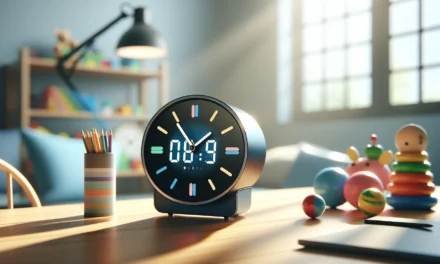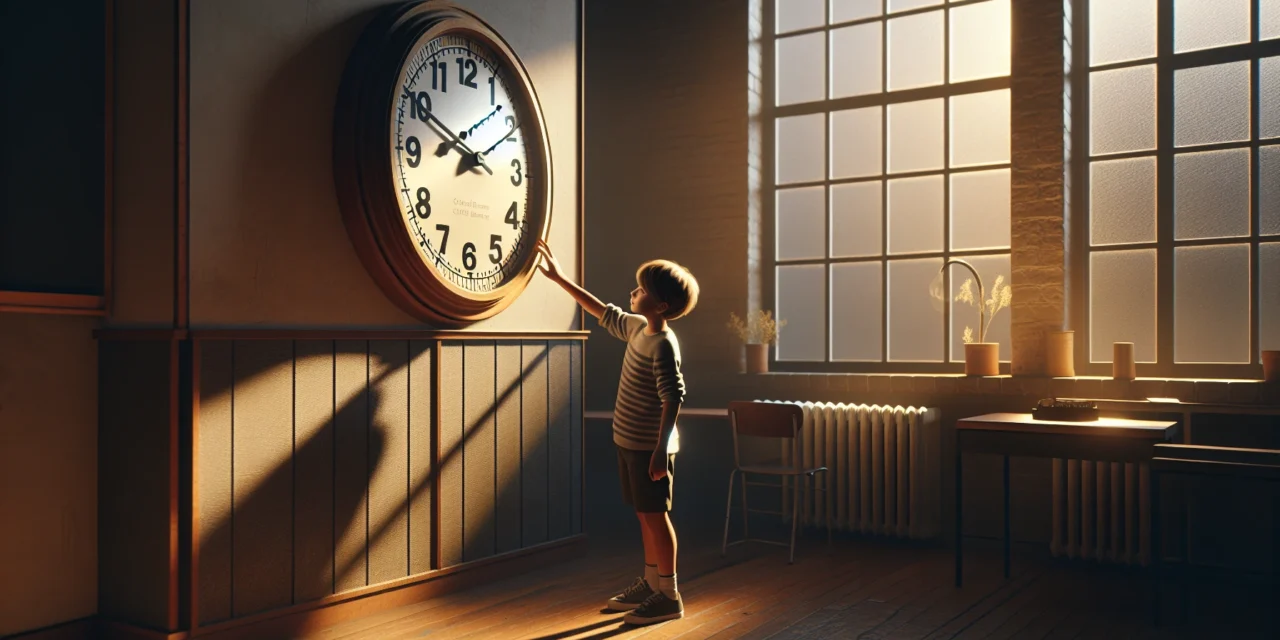
This guide helps parents explore fun ways to introduce STEM learning at home, with basic tips and strategies for making lessons engaging. You’ll find suggestions that mix proven teaching methods and practical tools, and we also feature one standout Amazon item that can add a creative spark to your child’s learning space.
Table Of Contents
- Time Learning Clock for Classroom Overview
- Kit Features
- Engaging Hands-on Activity Tips
- Classroom Organization and Lesson Flow
- External Resources and Support
- Conclusion
- Frequently Asked Questions (FAQs)
- Sources
Key Takeaways
Using a Time Learning Clock can make teaching time fun and engaging for kids. It combines hands-on activities with interactive learning, which really helps in understanding.
Manipulating clock hands gives children a physical sense of time, making the concept easier to grasp rather than just learning from a textbook.
Digital features and apps for learning time can add excitement and practicality to lessons. Some kids may find tech tools more engaging than traditional methods.
Parents can integrate time learning into daily routines. It can be as simple as asking kids to help with setting timers or figuring out when to go to bed.
Bright Mind Tools: A Parent’s Guide to Tech-Supported STEM Learning is a great resource that helps parents figure out how to weave tech into everyday learning. It’s full of real-life tips for school-age kids and shows how tech can enhance their education experience.
Time Learning Clock for Classroom Overview
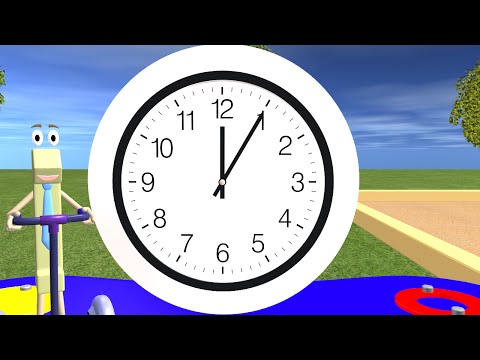
The time learning clock has become a popular tool in classrooms for its hands-on approach to teaching time management, math concepts, and early STEM skills. This system is designed to support various learning styles and make abstract ideas like time, angles, and fractions more tangible for young learners. The clock combines both analog and digital displays, offering a dual perspective that helps students understand how time is represented differently but relates to the same underlying measurement.
What is the Time Learning Clock?
The time learning clock is not just a clock—it’s a multi-tool educational device that gives students the chance to see and interact with time in ways that go beyond reading a standard wall clock. This tool engages students in a hands-on manner. They physically move clock hands to determine numbers, angles, or even portions of a day. The design supports inquiry-based learning, where children discover the relationships between numbers, time, and math principles by using the clock as a learning aid.
Why It’s Important For Early Learning
Understanding time is a critical part of a child’s development. Datasets, such as those through research in early childhood education, show that learning time helps improve problem-solving and analytical skills. This clock prompts students to:
– Experiment with different time displays (analog and digital)
– Practice counting and spatial reasoning by rearranging clock hands
– Engage in activities that integrate math with everyday life
By integrating this tool into daily lessons, educators create more dynamic and interactive learning experiences that help build the foundation for later academic success.
Kit Features
The time learning clock is available as a comprehensive kit, specially designed for classroom use. Everything is arranged to ensure simplicity and portability. Two standout items in this kit are the Big Time Learning Clock Classroom Kit and an Interactive Clock that works with both analog and digital displays.
Big Time Learning Clock Classroom Kit
The Big Time Learning Clock Classroom Kit offers a packaged solution that includes all the necessary components for hands-on, experiential learning. Some of the kit’s key features include:
– Large Display: Designed to be seen easily from anywhere in the classroom, making it ideal for group lessons.
– Robust Construction: Built with durable materials to withstand daily hands-on use by young children.
– Multiple Components: Comes with adjustable clock hands and markers to help illustrate time, angles, and fractions.
– Visual Aids: Pre-printed graphics that help guide lesson plans and provide quick references during lessons.
One of the best aspects of this kit is its ability to set up an interactive session where students can independently move the clock hands. This creates an environment where hands-on manipulation is encouraged, leading to higher retention of abstract concepts like time intervals and fractional parts of a circle.
Interactive Clock Details
The Interactive Clock in the kit stands out because it blends both analog and digital functionalities offering dual-mode learning:
– Analog Display: Traditional hands-on clock that students can adjust manually. This feature helps them understand rotations, angles, and the relationship between hours and minutes.
– Digital Display: Coordinates with the analog display and shows the time in digits, helping students see the same information in two different formats. This dual presentation reinforces the connection between analog reading and digital readouts.
The incorporation of both displays means educators can introduce comparisons and even show how the same moment in time is represented differently. For example, teachers can set a challenge where students first set the analog clock to a given time and then check their accuracy against the digital display.
Engaging Hands-on Activity Tips
When using the time learning clock, implementing a variety of activity tips not only fosters engagement but also builds understanding of more complex concepts like angles and fractions through fun, interactive play.
Teaching Time With Clock Manipulation
To get students involved directly, teachers can set up step-by-step activities:
– Step 1: Begin by demonstrating how to move the clock hands. Use the large interactive clock to show what happens to the angle between the hands as the time changes.
– Step 2: Ask children to set the clock to a specific time, such as 3:15. Encourage them to explain the position of each hand.
– Step 3: Have a discussion about the duration of time that each hand represents. What does it mean when the big hand points to 12, or when the small hand points exactly between two numbers?
– Step 4: Introduce mini challenges. For example:
– Set the clock to different times and ask students to estimate the difference in angles.
– Allow children to experiment on their own with different configurations to see which positions signal the start and end of an hour.
These activities provide a clear, practical application of abstract time concepts. They also develop motor skills and fine-tuned hand-eye coordination through the physical manipulation of the clock components.
Teaching Angles and Fractions
The clock offers a unique way to connect time to geometry and fractions. Here’s a simple breakdown of activities:
- Angles:
- Explain how the minute hand moves 360 degrees over 60 minutes.
- Ask students to find out how many degrees the minute hand moves in 15 minutes. This exercise not only reinforces counting but also builds a foundation for understanding reference angles.
Use the clock hands to illustrate acute, right, and obtuse angles.
Fractions:
- Highlight that each hour on the clock represents 1/12 of a full circle.
- Explain that 3 hours account for a quarter of the circle, which is a neat way to introduce fractions.
- Engage students by asking, “What fraction of the day is it if we move from 9 to 3?” Let them use the clock as a visual and physical tool to solve the problem.
Incorporating these activities means that abstract math becomes concrete. Hands-on interaction gives students a spatial understanding, making learning both effective and enjoyable.
Classroom Organization and Lesson Flow
Managing lessons with interactive tools like the time learning clock can streamline classroom routines. With over 100 ready-made screens, customizable templates, and timer widgets, educators can organize their lessons efficiently while keeping students engaged.
Ready-made Screens and Customizable Templates
A standout feature of the learning clock kit is the inclusion of ready-made screens designed to support a variety of teaching moments. These screens offer:
– Visual Explanations: Pre-designed slides that explain time, angles, and fractions in a visual, student-friendly manner.
– Customizable Templates: Teachers can modify lessons to match their classroom needs. Use these templates to create individualized activities for different learning levels.
– Consistent Structure: The templates ensure that every lesson follows a clear, consistent flow, which helps students know what to expect.
Using these tools, educators can save time on lesson planning:
– Setup the template at the beginning of the lesson.
– Refer back to specific screens during group instruction.
– Allow students to work independently using personalized digital activities that complement hands-on clock manipulation.
For additional classroom organizational tips, teachers can check out Bright Mind Tools which has several guides on managing modern classrooms with tech-infused learning.
Timer Widgets for Focused Lessons
An important feature found in the kit is the timer widget. Using the timer is a simple way to add structure and boost focus:
– Activity Timing: Set a specific time for each activity. For instance, allocate 10 minutes for a hands-on exercise and use the timer to signal the end.
– Transition Signals: Use countdowns between segments of the lesson to help students switch gears smoothly.
– Encouraging Self-management: When students are aware that time is being tracked, they tend to become more engaged and manage their time better.
The timer widget thus becomes more than just a digital clock—it transforms into a classroom management tool that fosters an environment of self-regulation and clear expectations.
External Resources and Support
To extend learning beyond the classroom, several external resources can be integrated into your lesson plans. These websites offer complementary tools and additional support to enhance digital exploration and hands-on learning.
Virtual Manipulatives and Classroom Materials
Several online resources complement the physical clock kit:
– ClassPlayground: This site offers virtual manipulatives that help students explore math concepts interactively online. Use these resources to supplement clock activities, especially if individual practice is needed.
– Teachers Pay Teachers: A valuable platform for diverse classroom materials. You can find various lesson plans, templates, and visual aids that align well with the hands-on approach needed for teaching time and math effectively.
– Amazon Product Integration: Many educators have found success using specific Amazon products designed for STEM classrooms. The recommended clock kit is often available on Amazon, providing a reliable, cost-effective resource that aligns with classroom needs. It’s a practical addition for families and classrooms looking to invest in tech-supported learning tools.
STEM Integration in Learning
To bridge the gap between traditional hands-on learning and digital exploration, consider integrating additional STEM resources:
– NCTM: The National Council of Teachers of Mathematics offers a range of teaching tips, lesson plans, and research notes that can help reinforce math instruction through both digital and physical manipulation.
– STEM: A nod to STEM foundations, this resource emphasizes engaging, hands-on techniques that effectively meld classroom activities with technological exploration.
By integrating these tools, educators can create a balanced learning environment where digital platforms support and extend hands-on classroom activities.
For educators wanting to enrich their material with structured online resources, check out related articles on Bright Mind Tools which cover various aspects of tech-supported STEM learning. These articles provide insights into using everyday technology to boost engagement and link traditional lesson plans with innovative practices.
Using these external resources in tandem with the interactive clock kit enhances the educational experience, ensuring that both digital and tangible learning methods are addressed. This becomes particularly useful when tailoring lessons for different learning modalities—a key aspect in modern classroom management.
Bullet points summarizing classroom management strategies for time learning activities:
– Plan with Ready-made Screens: Use prepared visuals to give structure to your lessons.
– Customize Templates: Adjust plans based on specific student needs.
– Utilize Timer Widgets: Implement time tracking to maintain focus and encourage independent work.
– Mix Hands-on and Digital Tools: Combine clock manipulation activities with online manipulatives for a well-rounded lesson.
– Reference External Resources: Leverage platforms like ClassPlayground and Teachers Pay Teachers to find additional materials and enhance learning.
These strategies not only simplify lesson planning but also offer students multiple entry points for understanding time, angles, and fractions through both experiential and digital learning.
By effectively blending classroom tools and external digital supports, teachers can design lessons that are dynamic and engaging. The integration of physical manipulatives with digital templates and timer widgets demonstrates an evolving approach to STEM education—one that resonates with both students and parents navigating early education.
Educators who use the time learning clock find that students are more engaged and motivated to explore math concepts on a deeper level. The balance of analog manipulation and digital feedback creates an environment where students can experiment. The format encourages independent thinking while still maintaining a clear structure within the classroom, making discipline, creativity, and fun coexist.
Parents can also benefit from learning about these techniques through resources and guides provided by community platforms like Bright Mind Tools. Designed as a parent’s guide to tech-supported STEM learning, such resources provide helpful tips for integrating these tools in homework routines or during learning at home. They also offer advice on navigating between traditional learning and digital exploration, ensuring that the child’s learning experience remains well-rounded.
Digital resources alongside physical classroom tools build the foundation for a flexible, engaging learning environment. The hands-on manipulation of clock hands, whether on the Big Time Learning Clock Classroom Kit or via interactive online tools, bridges the gap between analog and digital learning. This helps students view concepts like time management not just as a clock-driven activity, but as a comprehensive study tool that supports various academic disciplines.
Moreover, the combined appeal of both analog and digital displays means that if one student struggles with traditional clock reading, the digital interface provides immediate validation and feedback. It fosters a positive cycle of learning where mistakes become immediate learning opportunities. This hands-on practice infused with digital confirmation promotes better retention and a stronger grasp on fundamental math skills.
Integrating this clock kit into daily classroom activities encourages a more active learning style. With lessons structured around manipulation and direct engagement, students are less likely to become passive listeners and more likely to participate actively. This active participation often leads to improved classroom dynamics and enhanced mixing of structured learning with spontaneous inquiry.
Another angle to consider is building inter-lesson connections. For instance, the same setup used in a clock activity can later be applied when introducing topics such as the concept of symmetry or even in science classes when discussing rotational motion. The visual and tactile interaction helps in creating links between different subjects, giving way to interdisciplinary teaching approaches that enhance overall comprehension.
Educators are encouraged to experiment with different clock-based activities. While some lessons may focus solely on telling time, others can expand into fraction exercises and angle measurement challenges. The diversity in lesson planning ensures that students remain excited about what’s next and feel a sense of achievement as they master each new concept.
When planning these lessons, it is essential to scaffold the learning progression. Begin with simple time-telling exercises and gradually introduce complexities like the calculation of angles or the conversion of clock positions to fractions of a circle. This step-by-step progression makes sure that each student can build on existing knowledge without feeling overwhelmed.
The time learning clock kit works best when teachers are flexible and willing to adjust lesson plans according to each class’s pace. Not every student learns equally, so the combination of structured templates with room for improvisation is key. The readiness of templates and timer widgets ensures that even if some sections move quickly, the overall flow remains steady and engaging.
By considering these varied aspects—hands-on manipulation, digital integration, and external resource support—the time learning clock kit serves as a cornerstone in modern classroom teaching. It supports STEM learning, provides teachers with ready-to-use assets, and gives parents a clear idea of how modern education can seamlessly combine traditional and digital learning methods.
Conclusion
This article recapped fun methods to teach kids time and math with interactive tools and simple activities, emphasizing both hands-on learning and digital resources. We highlighted key tips like using manipulatives and practical timers to ease the learning process and spark curiosity in children. For more expert ideas and solutions, check out Bright Mind Tools | to boost your STEM learning journey.
Frequently Asked Questions (FAQs)
What is a Time Learning Clock and how does it help kids learn?
A Time Learning Clock is a tool that helps children understand time in a fun way. It makes learning more interactive and visual, which is great for keeping kids engaged during study time
How can parents integrate a Time Learning Clock into daily routines?
Parents can use the clock during meals, playtime, or while setting a schedule. This not only builds time-telling skills but also helps kids understand the flow of their day
Is a digital version of a Time Learning Clock as effective as a traditional one?
Both versions work well but a digital clock often has extra features that make learning interactive. Some apps can be a fun complement to the traditional clock
How does Bright Mind Tools enhance STEM learning at home?
Bright Mind Tools: A Parent’s Guide to Tech-Supported STEM Learning showcases our expertise by providing smart, research-backed techniques for daily biology and math learning. It helps parents integrate modern resources into learning routines, and you can check out more details on Bright Mind Tools
Can a Time Learning Clock be used in classrooms or only at home?
Yes, it is flexible – teachers and parents can both use it. In classrooms, it adds a nice change to the usual methods, and at home, it helps keep learning fun and organized